Jiu jitsu
This program is a martial art focused on leverage, technique, and control rather than size or strength. It teaches how to safely defend yourself by using balance, timing, and positioning to manage an opponent. Practitioners develop physical fitness, mental discipline, and confidence while learning to stay calm under pressure.
About the program
Our classes teach kids and adults how to stay calm, focused, and confident while learning effective grappling and self-defense techniques in a fun, positive setting.
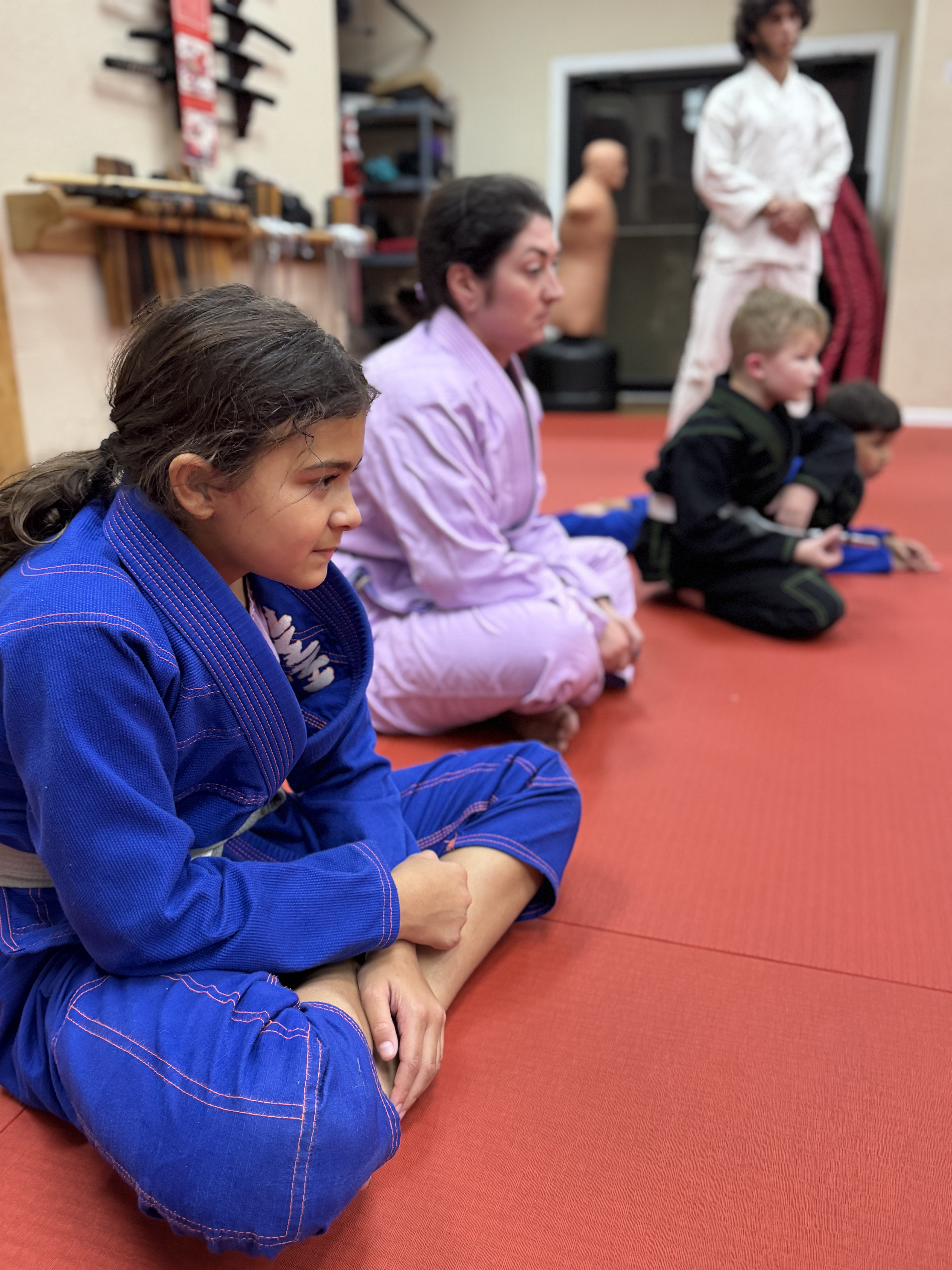
Kids jiu jitsu 6-14 years old
- Learn to control and escape from real positions using leverage instead of strength.
- Build core strength, flexibility, and body awareness through live drilling.
- Develop the calm and focus that comes from solving problems under pressure.
- Gain practical self-defense skills, including how to handle being taken to the ground.
- Train in a positive, well-supervised environment with clear rules and mutual respect.
- Track visible progress through belt and stripe promotions
Online exclusive offer — 2 Class FREE trial
Come in for two free classes.
Why jiu jitsu works for kids and adults alike
Jiu-jitsu rewards patience and problem-solving over size and aggression, which is why it suits a 7 year old and a 40 year old equally well. Here is what students gain from consistent training.

Technique beats size and strength
.jpeg)
Composure under pressure
.jpeg)
Self-defense that works on the ground
Real fitness without the grind
Online exclusive offer — 2 Class FREE trial
Come in for two free classes.
Frequently asked
questions
What age can students begin martial arts training?
Most programs accept students as young as 4–6 years old, depending on the class. Adult and senior programs are also available.
What should I wear to my first class?
Comfortable athletic clothing is sufficient for your first class. A uniform (gi) will be discussed once you enroll.
How often should I train?
Most students train 2–3 times per week for steady progress. Advanced or competitive athletes may train more frequently.
Is martial arts training safe?
Yes. Safety is a top priority. Classes are supervised by qualified instructors, techniques are taught progressively, and protective equipment is used when appropriate.
What benefits does martial arts training offer?
Training improves physical fitness, discipline, confidence, focus, coordination, self-defense skills, and mental resilience.
How does belt or rank progression work?
Progression is based on skill development, knowledge, attendance, and attitude. Students are evaluated through periodic testing.
Can martial arts help with self-defense?
Yes. Martial arts teach situational awareness, control, and practical techniques designed to help individuals protect themselves responsibly.